

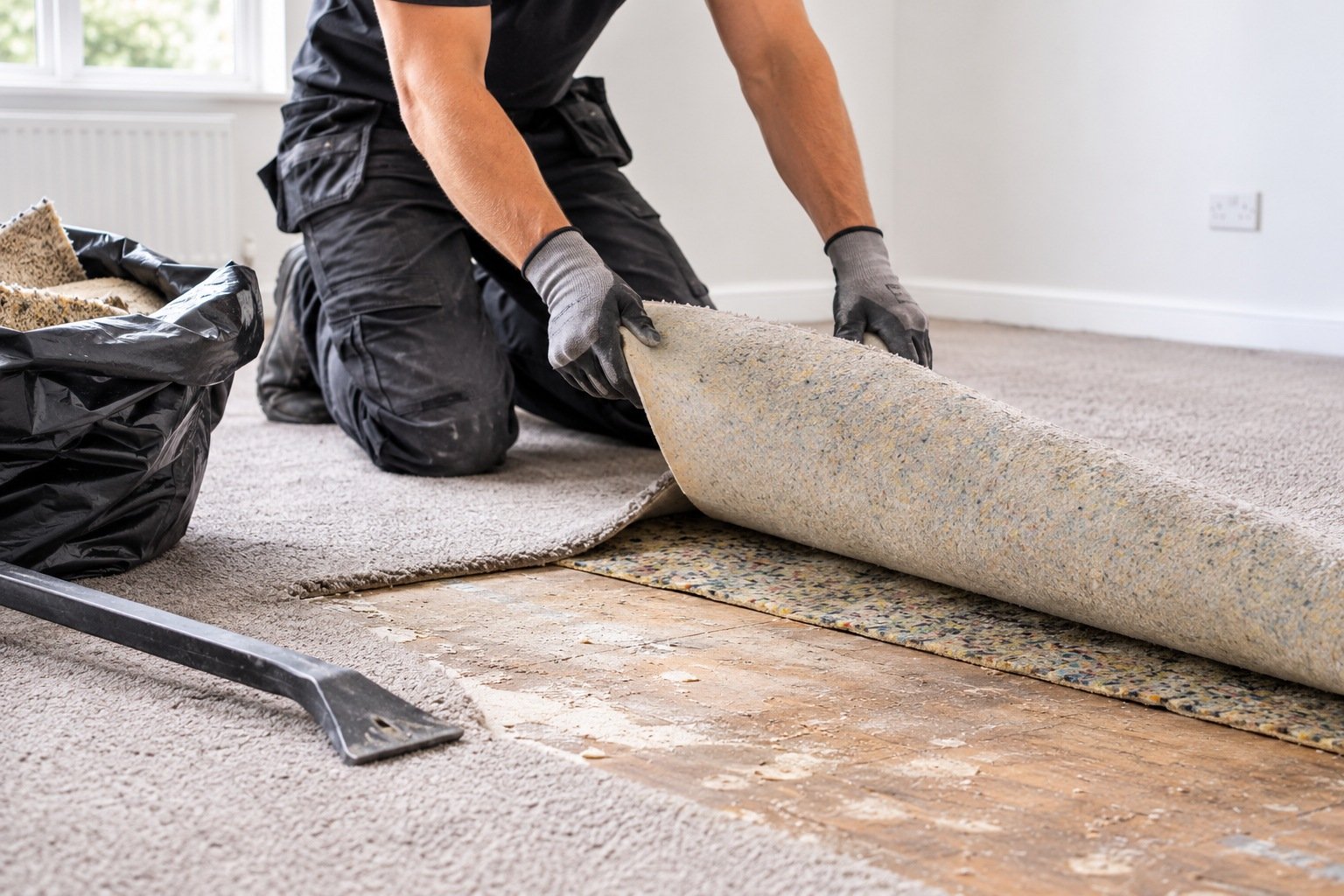
Professional flooring removal gives your new floor the clean, sound base it needs to look good and last. Old carpet, vinyl, laminate or wood can hide gripper strips, staples, glue, damp or damaged boards, and every one of these affects how the next floor performs. A professional team lifts the old flooring safely, controls dust, clears away the waste and leaves a subfloor ready for fitting. This guide explains how flooring removal works, what it costs and how it sets up a long-lasting finish.
What Is Professional Flooring Removal?
Professional flooring removal is the safe lifting, clearing and disposal of an existing floor covering by trained fitters before new flooring is installed. It includes taking up the floor itself, removing fixings such as gripper rods, nails, staples and adhesive, and leaving the subfloor clean and ready for inspection.
The job changes with the type of floor. Carpet and underlay usually come up quickly, while glued vinyl, tiles and nailed hardwood take more time, tools and care. A professional team knows how each floor was fitted and removes it without damaging the subfloor, pipes or cables underneath.
Flooring Demolition and Old Floor Removal
Flooring demolition and old floor removal are related but different jobs. Old floor removal lifts the top floor covering and keeps the subfloor intact. Flooring demolition goes further, breaking out tiles, screed or damaged subfloor materials, and is usually part of a larger renovation.
| Old floor removal | Flooring demolition | |
| What’s removed | Carpet, vinyl, laminate, LVT or wood | Tiles, screed, boards or damaged subfloor |
| Subfloor | Kept and prepared | Partly or fully replaced |
| Tools | Knives, pry bars, scrapers, saws | Breakers, grinders, heavy cutting tools |
| Typical project | Replacing flooring | Kitchen, bathroom or full renovation |
Before either job starts in an older property, check for asbestos. The Health and Safety Executive (HSE) advises that any home built or refurbished before 2000 may contain asbestos, and lists floor tiles among the materials where it can be found. Suspect materials should be tested and handled only by trained professionals, never broken up or sanded.
Benefits of Hiring Floor Removal Contractors
Hiring floor removal contractors saves time, protects your subfloor and makes the whole flooring project run more smoothly.
- Faster removal: Experienced fitters clear most rooms in a few hours, with the right tools for each floor type.
- Less damage: Careful lifting avoids gouging floorboards, cracking screed or hitting pipes and cables.
- Safe handling: Contractors manage sharp gripper pins, heavy materials and dust, and know when to stop and test for asbestos.
- Waste cleared: Old flooring is bagged and removed, so you don’t need a skip or trips to the tip.
- Problems found early: Damp, rot, loose boards and uneven floors are spotted before the new floor goes down.
Hardwood and Wood Flooring Removal
Hardwood and wood flooring removal depends on how the floor was originally fitted. Professionals identify the fitting method first, then choose the safest way to lift it.
- Floating floors (click engineered wood or laminate) are unclipped board by board, starting at the wall.
- Nailed floors (solid tongue-and-groove boards) are cut into sections with a saw set to the board depth, then prised up, with every nail and staple pulled out afterwards.
- Glued floors are cut into strips and lifted with a floor scraper, then the remaining adhesive is scraped or ground back.
Setting the cutting depth precisely protects the subfloor and anything running beneath it, such as underfloor heating pipes or electrical cables.
If the boards are solid hardwood in good condition, ask whether they can be lifted whole rather than cut. Reclaimed boards can be reused elsewhere, although careful lifting takes longer and may cost more.
Dust-Free Flooring Removal
Dust-free flooring removal is more accurately described as dust-controlled removal. Lifting and cutting old floors always releases some dust, but professionals keep it to a minimum.
Common dust control methods include:
- Sealing the room with plastic sheeting and covering doorways and vents.
- Cutting rather than grinding wherever possible, as grinding adhesive creates the most dust.
- Using extraction with dust-collecting tools and specialist vacuums.
- Bagging waste in the room before carrying it through the house.
The result is far less dust in the rest of your home, which matters most when you’re living in the property during the work.
Preparing Subfloors for New Flooring
Preparing the subfloor is the step that turns a cleared room into a base for new flooring. Once the old floor is out, the fitter inspects the surface and fixes any problems before the new floor goes down.
Typical subfloor preparation includes:
- Removing leftovers such as old grippers, nails, staples and adhesive residue.
- Repairing timber floors by screwing down loose or squeaky boards and replacing damaged ones.
- Testing concrete for damp, which can ruin adhesives and flooring.
- Leveling uneven areas with latex or self-levelling compounds.
- Adding a plywood overlay over floorboards for vinyl, LVT and other thin floors.
How much preparation you need depends on the new flooring. Carpet tolerates small imperfections, while LVT and vinyl need a very flat, dry base. Floor First’s vinyl and LVT fitting service includes this preparation, with plywood laid over floorboards and latex screed or self-levelling compound over concrete.
Flooring Removal Costs and Replacement
Flooring removal costs depend on the type of floor, the room size, how the floor was fixed and how the waste is disposed of. Carpet is the quickest and cheapest to remove, while glued floors, tiles and nailed hardwood take longer.
According to UK trade cost guide MyJobQuote (September 2026), removing a wooden floor typically costs between £40 and £180, for between two and six hours’ work. If you’re clearing it yourself, the same guide puts a skip for around 40 bin bags of waste at about £175.
The most cost-effective approach is often to book removal and fitting together, so one team lifts the old floor, prepares the subfloor and installs the new one. Floor First offers an old carpet uplift service for carpets held with gripper rods, adhesive or underlay, along with free, no-obligation measurements and estimates.
FAQs
What is professional flooring removal, and why is it important?
Professional flooring removal is the safe lifting and disposal of old flooring by trained fitters. It’s important because it leaves the subfloor clean, undamaged and ready for inspection, which gives new flooring a sound base.
How does flooring demolition prepare your home for new floors?
Flooring demolition prepares your home by breaking out damaged tiles, screed or subfloor materials that new flooring can’t sit on. It creates a fresh, level base, which is especially useful in kitchen and bathroom renovations.
How much does professional flooring removal cost?
Professional flooring removal cost depends on the floor type, room size and disposal. Carpet removal is usually the cheapest, while glued floors, tiles and nailed hardwood cost more because they take longer to lift and clear.
What is the difference between floor demolition and flooring removal?
Flooring removal lifts only the top floor covering and keeps the subfloor. Floor demolition goes further, breaking out tiles, screed or the subfloor itself, and is usually part of a larger renovation.
Should you hire professional floor removal contractors?
Yes, hiring professional floor removal contractors is worth it for most homes. They work faster, protect the subfloor, control dust, remove the waste and spot problems such as damp or loose boards before new flooring goes down.
How do professionals remove old hardwood flooring?
Professionals remove old hardwood flooring based on how it was fitted. Floating boards are unclipped, nailed boards are cut into sections and prised up, and glued boards are cut into strips and scraped from the subfloor.
What is the average hardwood floor removal cost?
Removing a wooden floor in the UK typically costs between £40 and £180, for two to six hours’ work, according to MyJobQuote’s 2026 cost guide. Large rooms, glued floors and waste disposal can increase the price.
Is dust-free wood floor removal possible?
Completely dust-free wood floor removal isn’t possible, but dust-controlled removal is. Professionals seal the room, cut instead of grinding where they can, use extraction tools and bag waste on site to keep dust to a minimum.
Planning new floors? Book a free, no-obligation measurement with Floor First and get your room ready for fitting.